Bad Day to Be Sushi: A Hilarious Design for Foodies
There’s a specific kind of humor that lands perfectly with anyone who’s ever looked at a plate of food and felt a sudden, absurd wave of sympathy. The "Bad Day to Be Sushi" funny food design taps directly into that feeling, blending adorable kawaii art with a dash of existential kitchen dread. It’s not just a graphic; it’s a tiny, panicked story told through a single, worried salmon nigiri. This design has a personality—it’s nervous, it’s cute, and it knows what’s coming. For designers, crafters, and small business owners, understanding this kind of character-driven asset is key to creating products and content that truly connect with an audience.
Anatomy of a Relatable Food Character
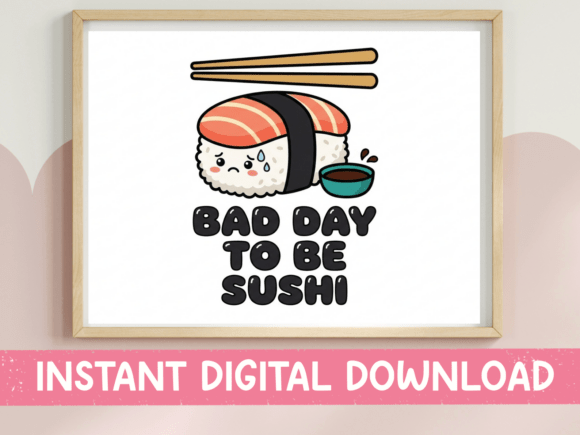
At its heart, the design is a masterclass in expressive simplicity. The central character is a classic salmon nigiri, but its face is anything but calm. Large, round eyes sit wide with worry, and prominent sweat drops beading on its forehead convey a universal feeling of anxiety. This is modern typography and illustration working in tandem—the text "Bad Day to Be Sushi" isn't just a label; it's the punchline, rendered in thick, wobbly black lettering that feels hand-drawn and slightly frantic, mirroring the sushi's panic. The composition is clean and focused: the distressed nigiri sits beside a small dish of soy sauce, with a pair of chopsticks hovering ominously above, framing the entire scene as a moment of impending doom.
This visual style is a powerful example of a creative font and illustration hybrid that functions as a complete design asset. It’s a display font in spirit, meant to grab attention and convey a specific mood rather than set body text. Its appeal lies in its blend of cute and dark humor, a combination that resonates strongly with a millennial and Gen Z audience that appreciates irony and self-aware jokes. The design doesn't take itself seriously, which makes it incredibly versatile for casual, personal, and commercial projects where a touch of whimsy is needed.
Where This Design Truly Shines: Practical Applications
The real value of the "Bad Day to Be Sushi" design is its chameleon-like ability to adapt across different media. Because it’s provided as both an SVG and a high-resolution PNG with a transparent background, it slots seamlessly into numerous workflows. For crafters using a Cricut or Silhouette, the SVG file is perfect for creating clean, scalable cuts for vinyl decals, t-shirt designs, and tote bags. The PNG is ready for sublimation printing, making it ideal for creating vibrant mugs, water bottles, phone cases, and aprons where the design needs to pop against any color.
Beyond personal crafting, this design has significant commercial potential. It’s a natural fit for packaging design for a sushi restaurant’s merchandise line, takeout containers, or branded stickers. As part of a brand identity for a quirky food blog or a Japanese food humor account, it can become a recognizable mascot. For social media graphics, it’s instant engagement bait—perfect for a "mood" post on a stressful day or as part of a series of funny food illustrations. In editorial design, it could liven up a food magazine’s humor section or a cookbook’s chapter divider. The key is recognizing its role as a premium font and illustration combo that injects personality, not as a workhorse for long paragraphs of text.
Integrating the Design: A Creator's Guide
Using this asset effectively requires a bit of strategic thinking. First, consider the project's tone. The "Bad Day to Be Sushi" design is inherently playful and humorous. It would be jarring in a serious, minimalist context but perfect for projects aiming for a lighthearted, approachable, or even slightly cheeky vibe. Think about your audience: are they sushi lovers? Fans of kawaii culture? People who appreciate niche internet humor? If so, this design is a direct hit.
Next, think about font pairing and composition. Since the design includes its own lettering, you rarely need to pair it with another typeface. However, if you're incorporating it into a larger layout, pair it with clean, simple sans serif fonts for any additional information to avoid visual clutter. The wobbly, handwritten style of the main phrase is the star; surrounding it with too many competing styles will dilute its impact. In terms of visual hierarchy, the design should be a focal point, not a background texture.
Finally, always test the design in context. Mock it up on your intended product—a mug, a t-shirt, a social media post—to see how the colors and details hold up at different scales. Check the readability of the phrase at smaller sizes. While the SVG ensures scalability, the emotional impact is best felt at a size where the character's expressive face is clearly visible. Remember, you're not just selling a graphic; you're selling the laugh of recognition a sushi fan gets when they see it.
In a crowded market of generic designs, assets like "Bad Day to Be Sushi" stand out because they tell a micro-story. They offer a moment of connection through shared, absurd sentiment. For the designer or entrepreneur, leveraging such assets means building a collection that speaks directly to specific subcultures and hobbies, transforming a simple graphic into a memorable piece of brand identity or a best-selling product. It’s a reminder that sometimes, the most effective design is the one that makes someone chuckle and say, "That’s exactly how I feel."